
ONE review: the end credits are the better film
Sankagiri Rajkumar writes, shoots, edits and plays every role in ONE. The six-year feat is real. The film it produced never gives you a reason to care.
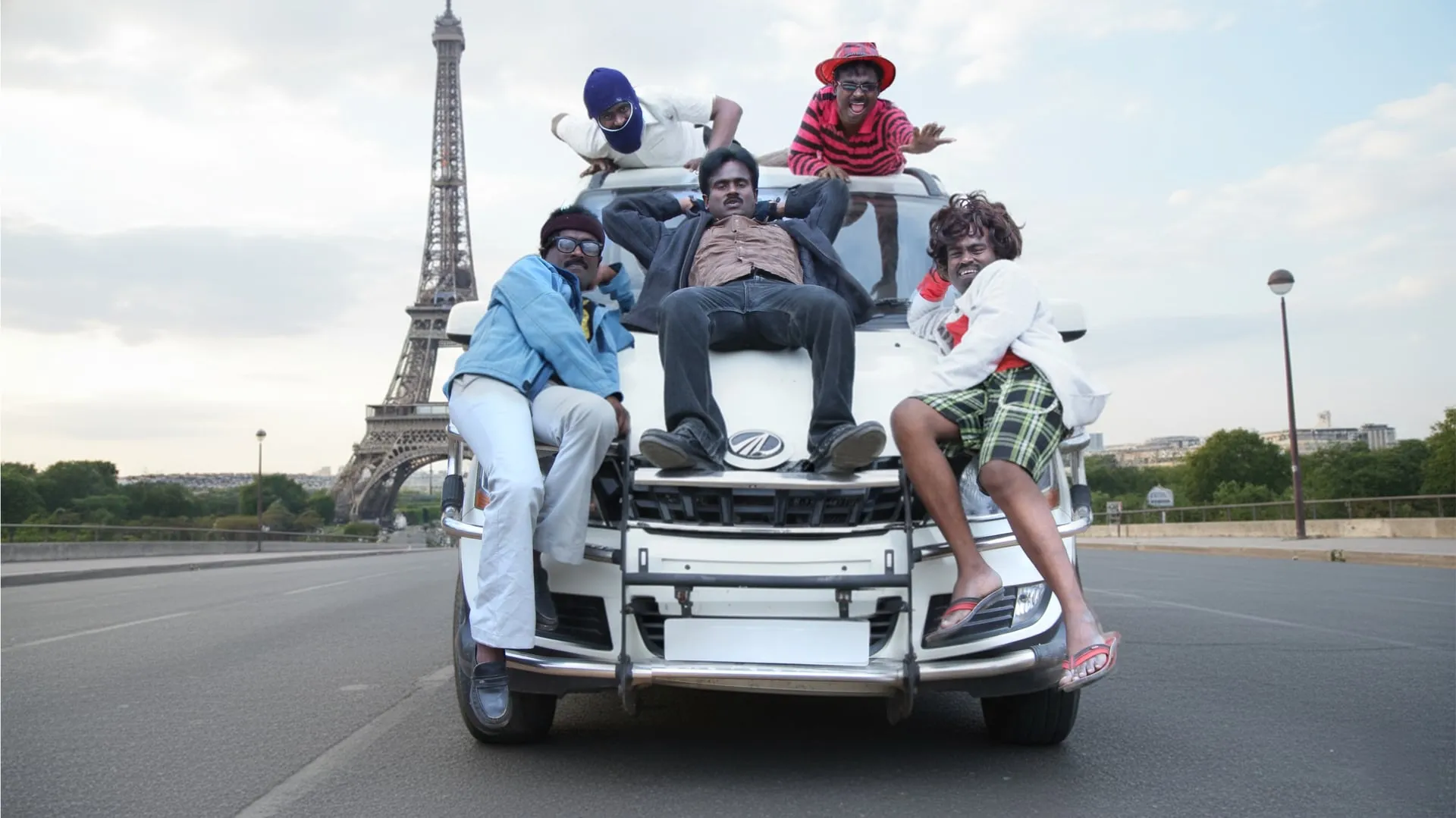
ONE asks for the kind of applause you give a circus act before showing you whether the act is any good. The billing is literal. Sankagiri Rajkumar wrote it, directed it, shot it, cut it, scored it, built the props, and plays every character on screen, the hero and his four friends included. Six years of his life went into that sentence, and when he appears five times in a single frame in five different wigs, the labour is impossible to miss. So is the gap between labour and cinema. An audience buys a ticket for a movie, not a marathon.
The setup, to be fair, has a pulpy spark. Five friends stumble on an abandoned lab deep in a forest, where a red injection makes every other human on Earth vanish for ten days. The planet becomes theirs, no queues, no crowds, no consequences. Raja, a narcissist who rather likes the idea of ruling an empty world, wants it to stay this way forever. When his friends point out that this is a childish way to live and suggest the green injection that reverses everything, he promises to kill anyone who tries. He keeps the promise, one friend at a time.
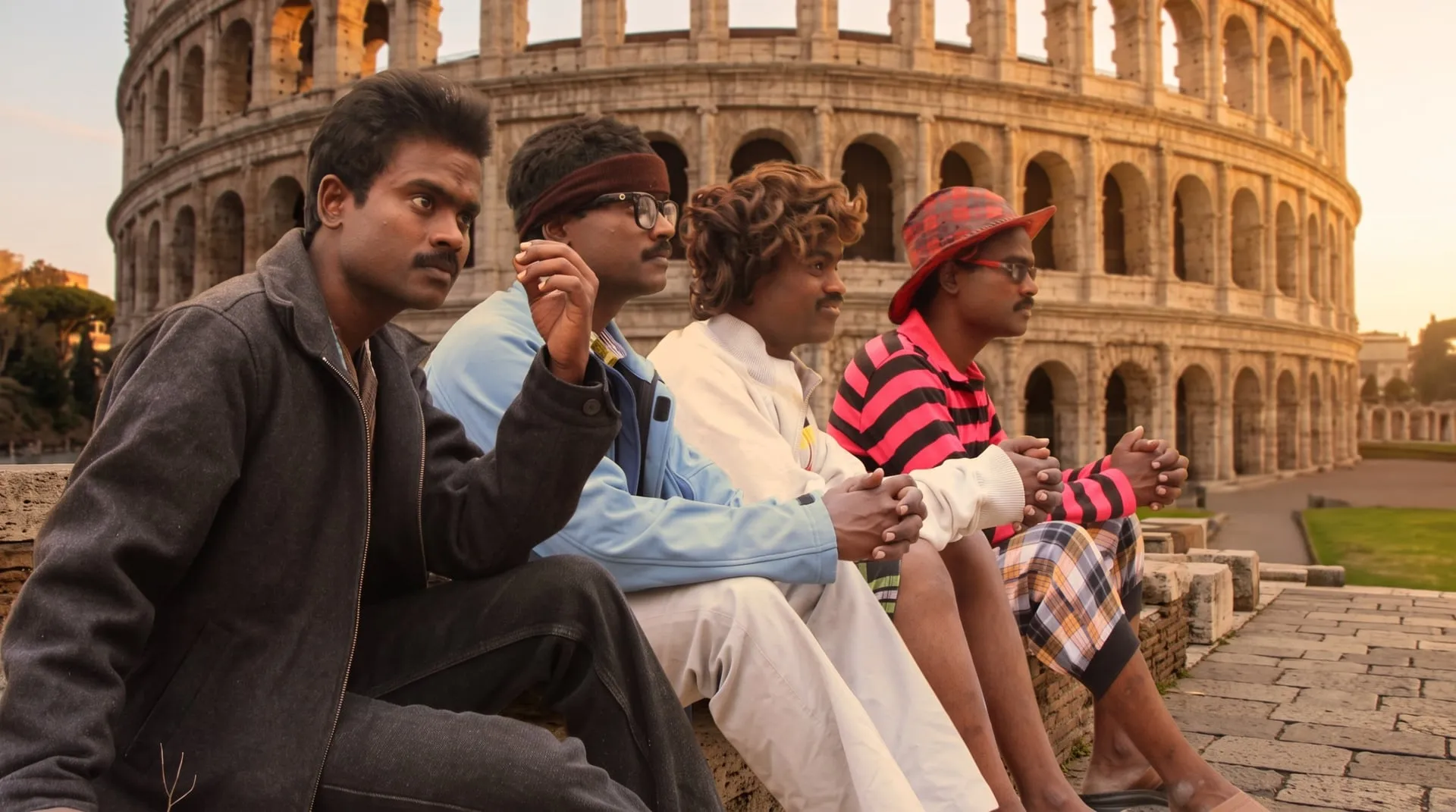
Rome by green screen: four Rajkumars and a sunset that never quite falls on any of them.
That premise could have carried an absurd comedy, a pulp thriller, or a fable about freedom curdling into loneliness. ONE finds none of them. A film this exposed survives if any one element hits: if the comedy lands, you excuse the craft; if the story grips, you excuse the comedy; if the making dazzles, or the lead has wit and charm, you excuse nearly everything else. Here the humour keeps swinging and missing, the dialogue loops back on itself, and the five friends grate rather than charm. The composited Paris and New York never look lit by the same sun as the actors, so long stretches play like machinima, and there is machinima on the internet staged with more conviction. Rajkumar the performer cannot rescue Rajkumar the concept either; he lacks the screen presence to keep five versions of himself watchable for a hundred minutes.
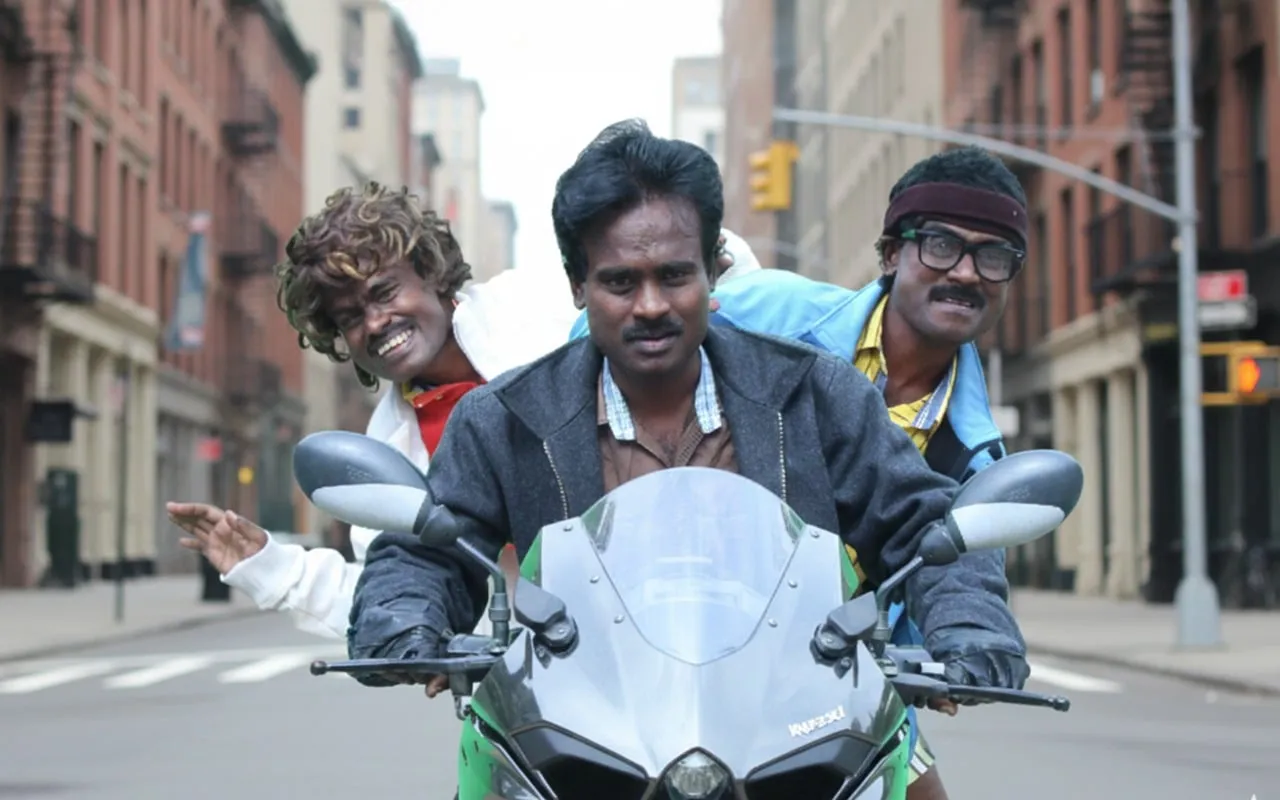
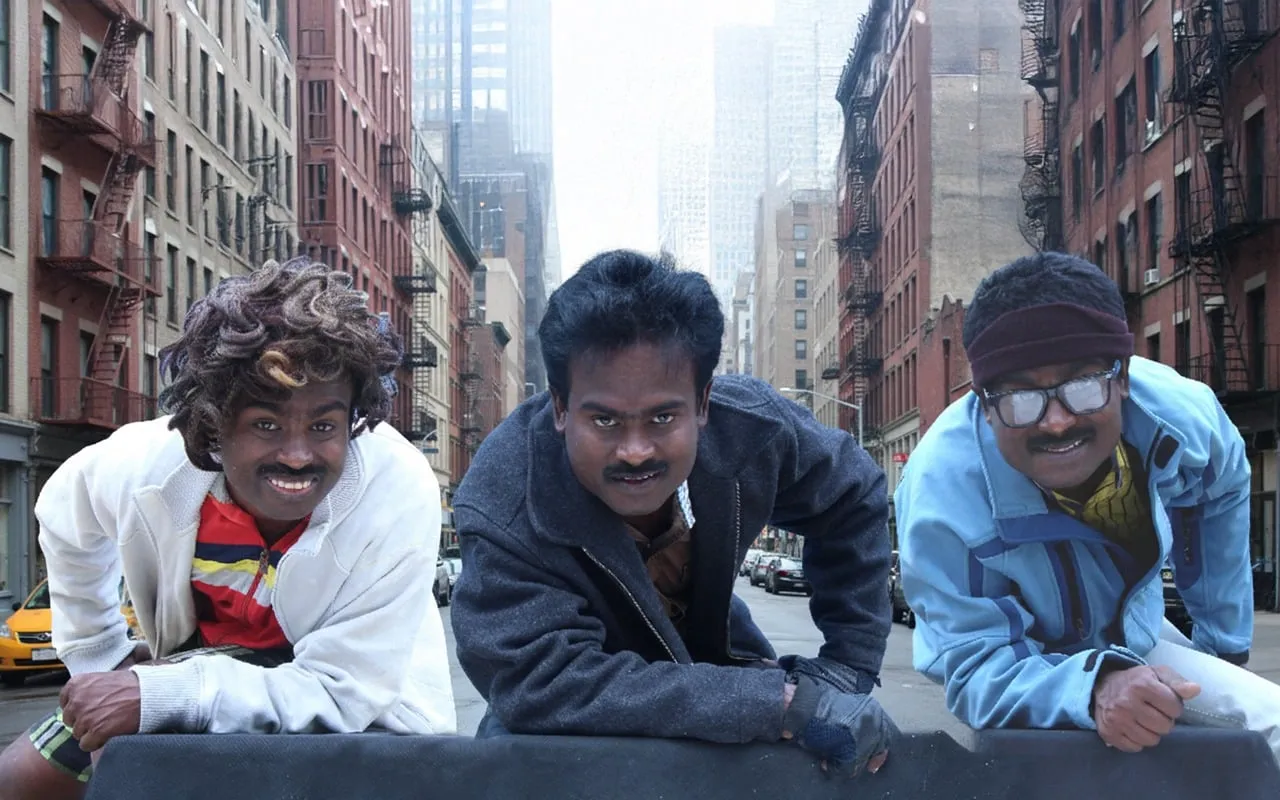
New York, emptied out by the injection and by the compositing.
Through all this, Raja’s ailing mother keeps calling at exactly the wrong moments. Once he is truly alone at the end of his world tour, the film swerves into repentance: hate is no way to live, and unless he races back to the lab in Tamil Nadu and takes the green injection before the ten days expire, humanity is gone for good. Cue the tearful breakdown, with his mother on the line minutes before annihilation. The emotion arrives on schedule; nothing before it has earned it.
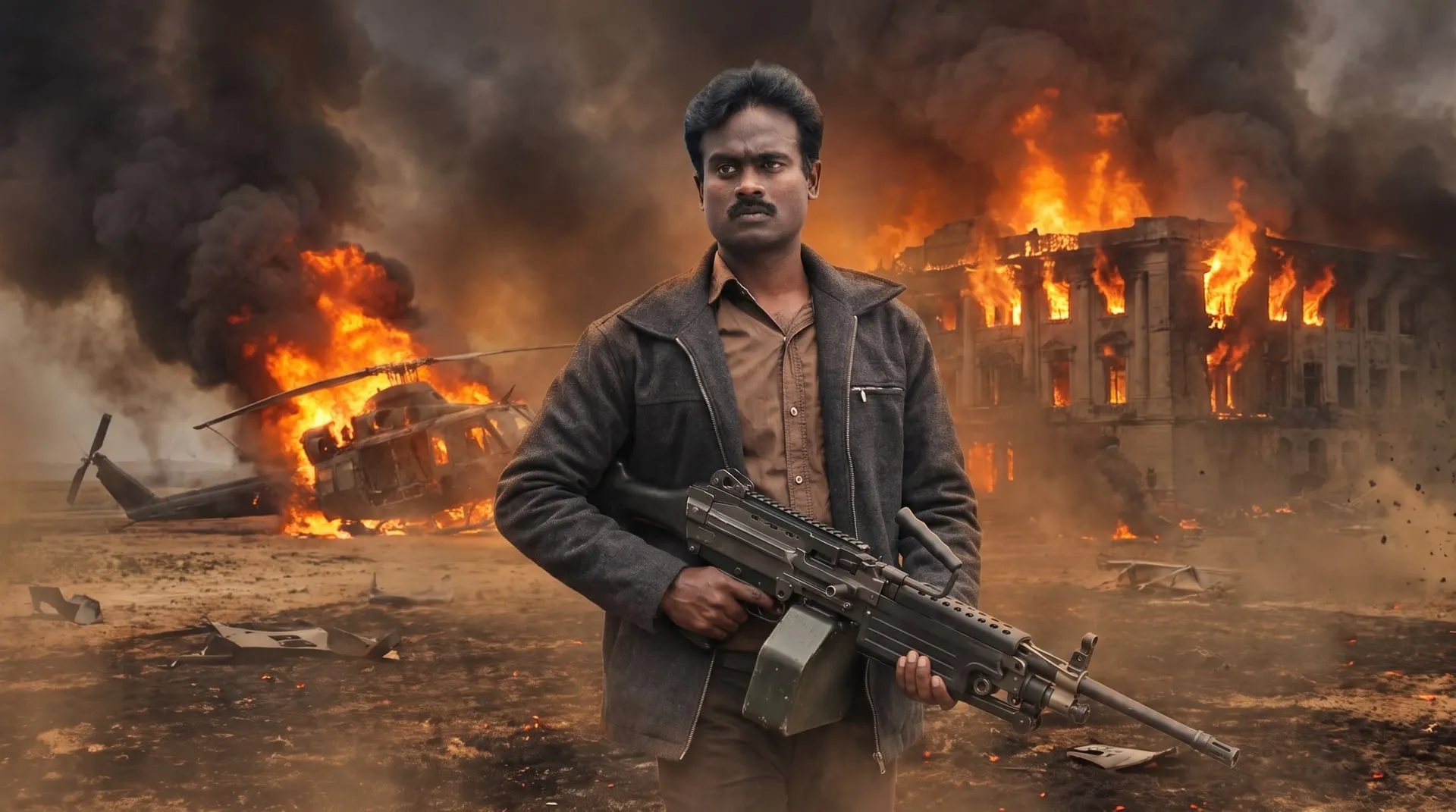
The action aims for Hollywood scale and lands somewhere near a video game cutscene.
And then the end credits play, and they are the best thing in the theatre. Rajkumar rolls extended making-of footage over them: one man rigging his own frames, operating the camera, swapping wigs between takes, solving problems no sane production would create for itself. It is genuinely absorbing, and a tightly cut YouTube documentary of those six years would probably outdraw the theatrical run. Which is what makes ONE so baffling. Rajkumar is no novice, with Vengayam and Bioscope behind him, and even a crew of three or four would have lifted this considerably. Nobody owes a movie affection because one person did the work of a hundred. What reaches the screen is all that counts, and here the making is the story while the movie is the casualty.
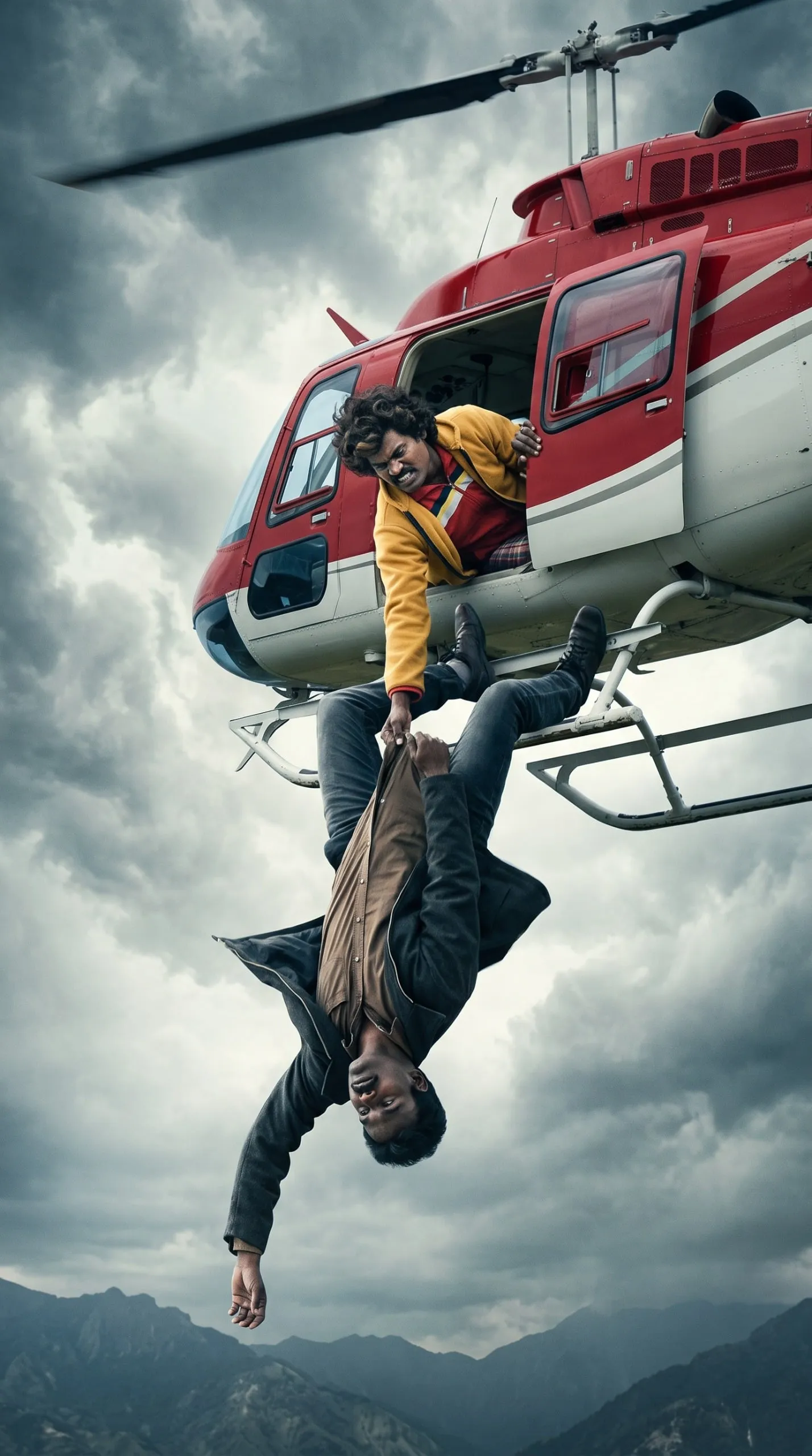
Every stunt is Rajkumar saving or attacking Rajkumar, which is its own kind of commitment.
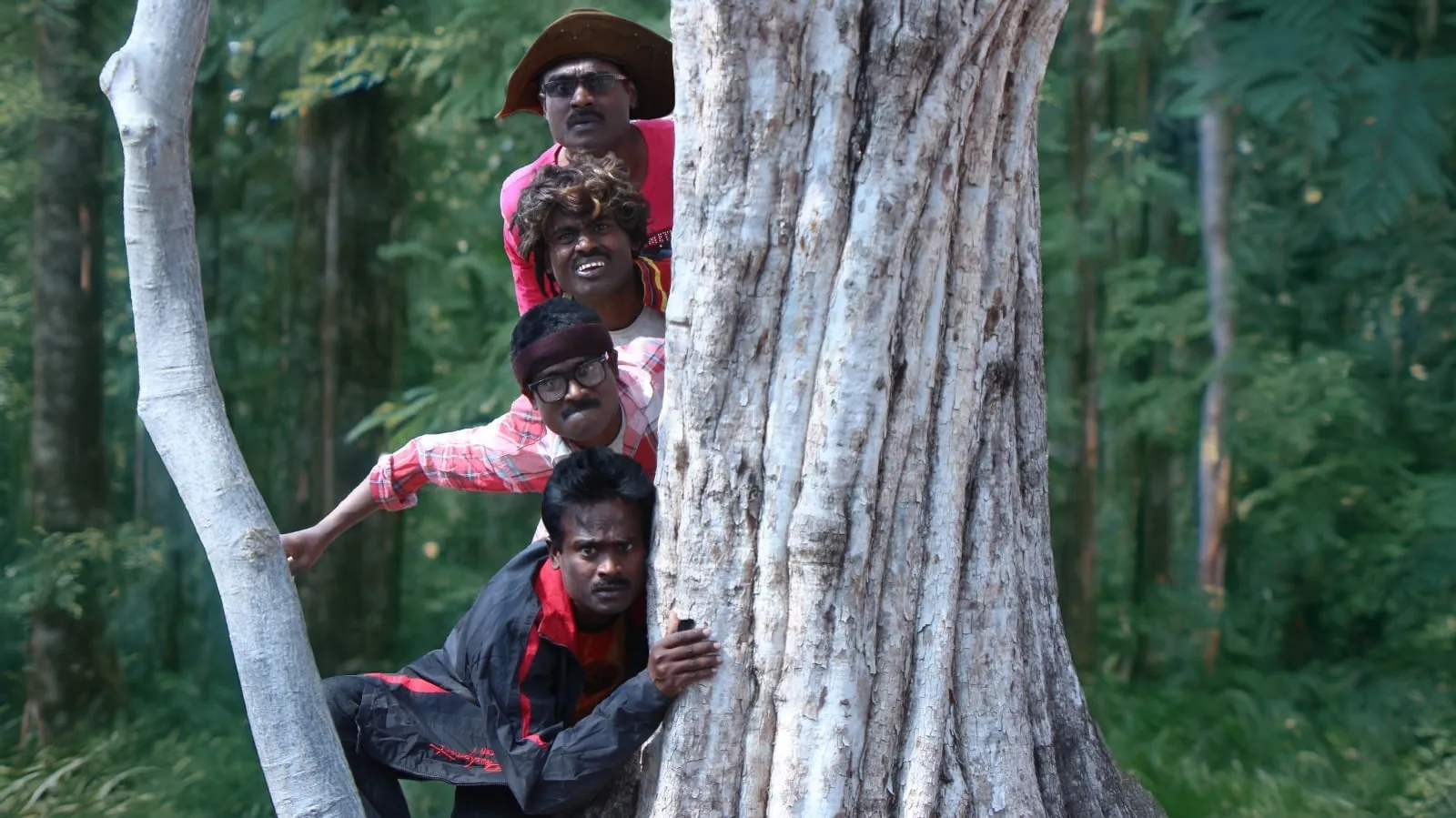
Five men, one face: the film’s whole pitch in a single frame.
More onONE,Sankagiri Rajkumar,Movie Review